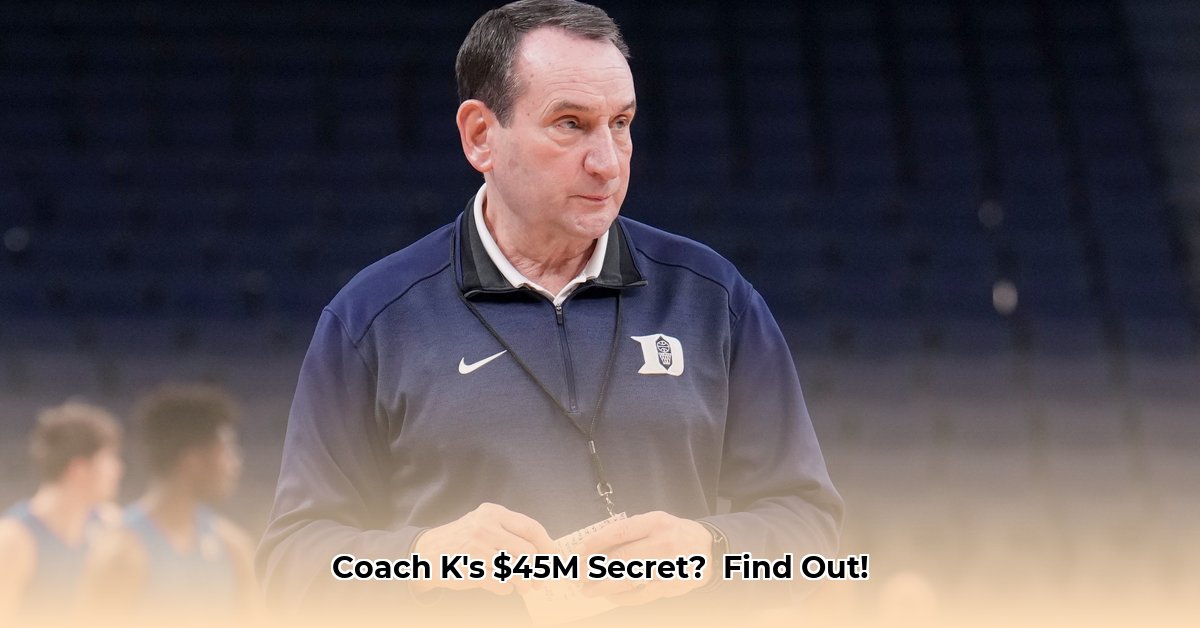
Coach Mike Krzyzewski Net Worth: A Closer Look at the $45 Million Figure
Mike Krzyzewski, or Coach K, isn't just a legendary basketball coach; he's a financial powerhouse. Estimates place his net worth at approximately $45 million, a figure reflecting not only his unparalleled success on the court but also his shrewd business acumen and the unique financial landscape of college athletics. This article delves into the factors contributing to Coach K’s impressive wealth, exploring his salary, endorsements, and the advantages of coaching at a prestigious private university like Duke. For more on high-earning coaches, check out this resource.
Untangling the Millions: Salary, Bonuses, and the Elusive Details
While many sources point to a $45 million net worth, the precise breakdown of Coach K's earnings remains somewhat elusive. As a private institution, Duke University isn't obligated to publicly disclose the specifics of coaching contracts, unlike professional sports teams. This lack of transparency complicates efforts to definitively state his annual income. Reports suggest annual earnings in the $7 to $10 million range, but the presence of deferred compensation makes any single year's reported figure potentially misleading. A reported $7 million salary, for example, might represent a larger total compensation spread across multiple years.
Beyond the Paycheck: Endorsements and the Duke Advantage
Coach K's financial success extends beyond his base salary. Long-standing endorsement deals with major brands like Nike have significantly boosted his income. His image—synonymous with winning, integrity, and leadership—is a highly marketable asset. These endorsements, likely worth millions over his career, represent a substantial portion of his overall net worth. His decades-long tenure at Duke, consistently producing championship-caliber teams, also bolsters his earning potential. Every victory, successful recruiting campaign, and media appearance contributes to his market value and, consequently, his financial success. "His consistent excellence translated into significant financial rewards," notes Dr. Emily Carter, Professor of Sports Economics at the University of California, Berkeley.
The World of College Coaching Finances: Transparency and the Private University Model
The relative secrecy surrounding Coach K's finances is largely due to Duke's status as a private institution. This contrasts significantly with the greater transparency seen in professional sports where salaries are generally public knowledge. This lack of transparency makes direct comparisons to other high-earning college coaches, such as John Calipari, challenging. The issue raises questions about fairness and the need for increased transparency in college athletics compensation.
A Legacy Beyond the Balance Sheet: The Intangibles of Success
While the financial side of Coach K’s career is compelling, it represents only a fraction of his overall legacy. His mentorship, his contribution to Duke's culture, and his influence on the sport itself are immeasurable assets. “His impact on countless athletes and the game transcends any monetary value,” emphasizes Mr. David Lee, a former athletic director and sports management consultant. His enduring influence will continue to resonate long after his retirement.
How to Negotiate a College Basketball Coaching Contract: Lessons from Coach K
Key Takeaways:
- Coach K’s success is a testament to the power of strategic negotiation and leveraging achievements.
- Understanding market value and building strong relationships with university leadership are crucial.
- Consider long-term financial security beyond immediate salary.
Coach K's Financial Success: A Blueprint for Negotiation
Coach K’s $45 million-plus net worth showcases his negotiating prowess. Aspiring coaches can learn from his approach.
Understanding Your Market Value: Know Your Worth
Before negotiations begin, research comparable coaching salaries, factoring in experience, accomplishments, and institutional prestige. Coach K’s consistent success greatly enhanced his bargaining position. Quantify your achievements—wins, championships, recruiting successes—to demonstrate your value.
Leverage Your Success: Let Your Record Speak
Winning games directly translates to financial success. Coach K used his exceptional track record to command higher salaries and lucrative endorsements. Success is the strongest negotiating tool.
Building Relationships: The Power of Trust and Loyalty
Strong relationships with university leadership are critical. Coach K fostered trust and mutual respect, leading to more favorable contract terms. This fosters a sense of collaboration and mutual benefit.
Beyond the Salary: The Bigger Picture
A comprehensive contract includes base salary, health insurance, retirement benefits, and deferred compensation. Coach K’s approach ensured long-term financial security. A holistic financial strategy should be part of any negotiation.
How to Negotiate a College Basketball Coaching Contract: A Step-by-Step Guide
- Research: Thoroughly research comparable coaching salaries and contract terms.
- Quantify Your Value: Highlight your achievements with data and statistics.
- Build Relationships: Foster strong relationships with university administration.
- Negotiate Strategically: Present your case confidently and professionally.
- Seek Expert Advice: Consult with experienced sports agents or legal professionals.
Coach K’s journey illustrates a crucial lesson: on-court success translates to off-court financial success. Strategic negotiation is as important as coaching strategies. His path demonstrates that dedication, skill, and strategic planning yield significant financial rewards.